There once lived a man possessed by an insatiable longing for what he called peakness: a fevered thrill which strips sleep from the soul and replaces it with urge. For years he wandered from country to country, mountain to mountain, fasting and searching, never satisfied. He sought sensation, but not as the layman does; no, he pursued it as a connoisseur of awe, a seeker of the sublime. His friends, or acquittances for none were close enough, called him reckless, but he was just a a lover of heights who feared the plains*.* And so it came to pass, on a day already destined for intensity, that he turned his eyes toward the greatest volcano known to man. He decided to climb.
The locals warned him of the fumes and the guides spoke of men who went up and didn’t come down sane, or didn’t return at all. He, however, never contrived to register such idiosyncrasies spoken by only the foolish and fearful. Beneath his boots, the sand shimmered in a pulsating yellow-gold, mica blinking and sparkling with a secret light. It was, in his estimation, a gold-mine of feeling. Each glint struck him like a promise: You will feel again.
And yet, in the quiet of his mind, he questioned whether gold, stripped of all pretence, was ever anything more than sun-kissed sand. Still, he kept climbing.
As the air grew thinner, the heat heavier, and the world below smaller, he had imagined the ascent to feel holy, but it was merely exhausting. Sweat dripped from his temples. “Perhaps holiness requires more altitude,” he thought. At last, he reached the summit and stood, refulgent as a volcano, proud before the sublimity he had so rigorously pursued. Tremors of the chest, he had hoped; insight, he had expected. But no thunder came. Nothing felt different.
The volcano hissed in a serpentine exhale, curling around his ears like smoke. It pulsed with a steady rhythm, as if the earth itself had fallen into the monotonous cadence of habit. And yet, such pulsing was no stranger to the ordinary: the streetlamp late at night pulsed; the fluorescent hum of the fridge pulsed; all things, in their own way, performed this rhythm. The magma rose now and then, appearing like a well-oiled genie, sleek and obedient, like a ballet of molten obedience. The same exertion from the volcano repeated and the man grew devoid of surprise.
It was here he confronted the peculiar affliction of the modern consciousness: the pursuit of peakness. A condition in which the soul, discontent with the flatlines of ordinary existence, becomes addicted to intensity. Peakness was not merely the search for beauty, for thrill, or for awe; it was the endeavour to legitimize being through magnitude. Humanity had been, consciously or not, instructed to believe that meaning arrives only at the climaxes of life: mountains, revelations, volcanoes, flashes divine. The higher the peak, the more “real” the self must feel. He laughed, bitterly. The volcano spasmed in hysterical frenzy, rivers of molten chaos licking at the sky. But so too did the city, the market, the traffic. So too did his own thoughts. The world itself was a frenzy. Had he journeyed so far only to encounter the same tumult from which he had fled?
He remembered a moment, trivial yet revelatory, when he hissed soda into a glass. The fizz of soda and the roar of magma were not ontologically distinct. In that instant he realized: he had never truly perceived anything. He had sought magnitude to validate his being, but every experience, however intense, had been consumed rather than received for him to truly perceive the experience with the presumed greater magnitude. He had not experienced the sublime; he had chased it, and abandoned the mundane.
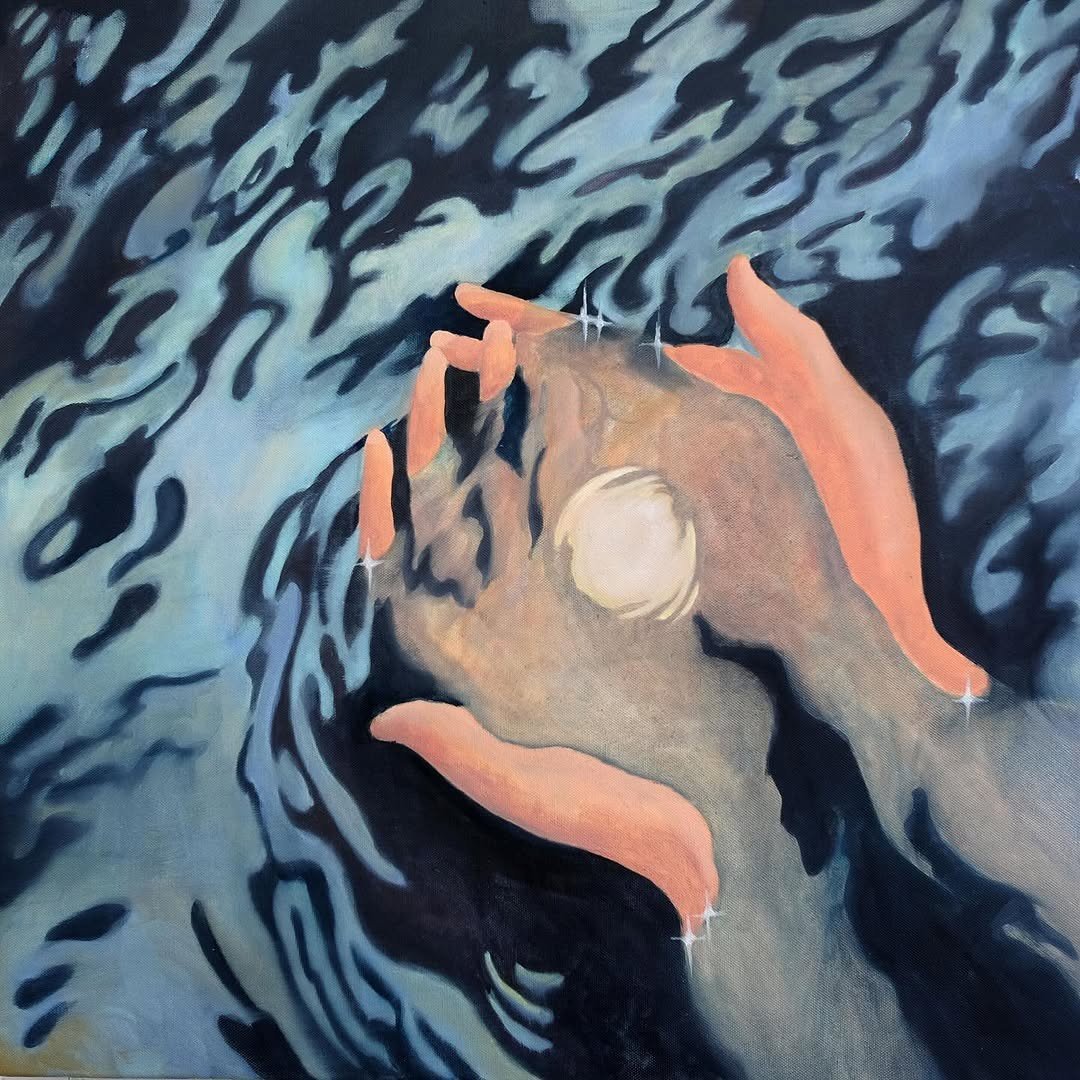
The volcano throbbed, but so did he. The wind whipped around him, hot and dry, and in a kind of mad surrender, he removed his gloves and plunged his hands into the ballet-performing magma. Pain surged upward in furious spirals. The throb of human hands met the throb of the earth. The two became indistinct but not because they were one, only because he assigned throb to both. The volcano had never throbbed; only his perception had. He collapsed backward, laughing and howling. Tears dried into salt. The point had never been the volcano. The sublime was not a mountain, nor a divine fire: it was the awareness of awareness, the throbbing wound of being that grants fire its meaning. Humanity believes it must climb mountains to find divinity and meaning, yet every height is relative. Every volcano is also a hissing soda. Meaning is absolute, but its source lies within. As he descended at dawn, his hands raw and trembling, he passed a young guide pouring soda into a glass beside his tent. The fizz whispered softly; the man paused, smiled faintly, and whispered to himself: “The volcano breathes still.” The guide looked at him, puzzled. “No, sir,” he said. “That’s just the soda.” But the man only nodded. He had learned what he came for.
The sublime has been transformed into spectacle. The esoteric has been reduced to the simple. No volcano, no monastery, no drug, no mountain, no god can offer what the fly upon the windowsill already provides. The eye that learns to see is the only peak worth climbing.